Tankless · tank · recirculation
Tankless Water Heaters — Installation, Service & Repairs
A water heater is rarely just a water heater. If it is failing early, something else is usually doing it — pressure running high, no expansion control, hard water scaling the tank, or a recirculation loop cycling far more than it needs to. Replacing the appliance without finding that means buying the same problem again in six years.
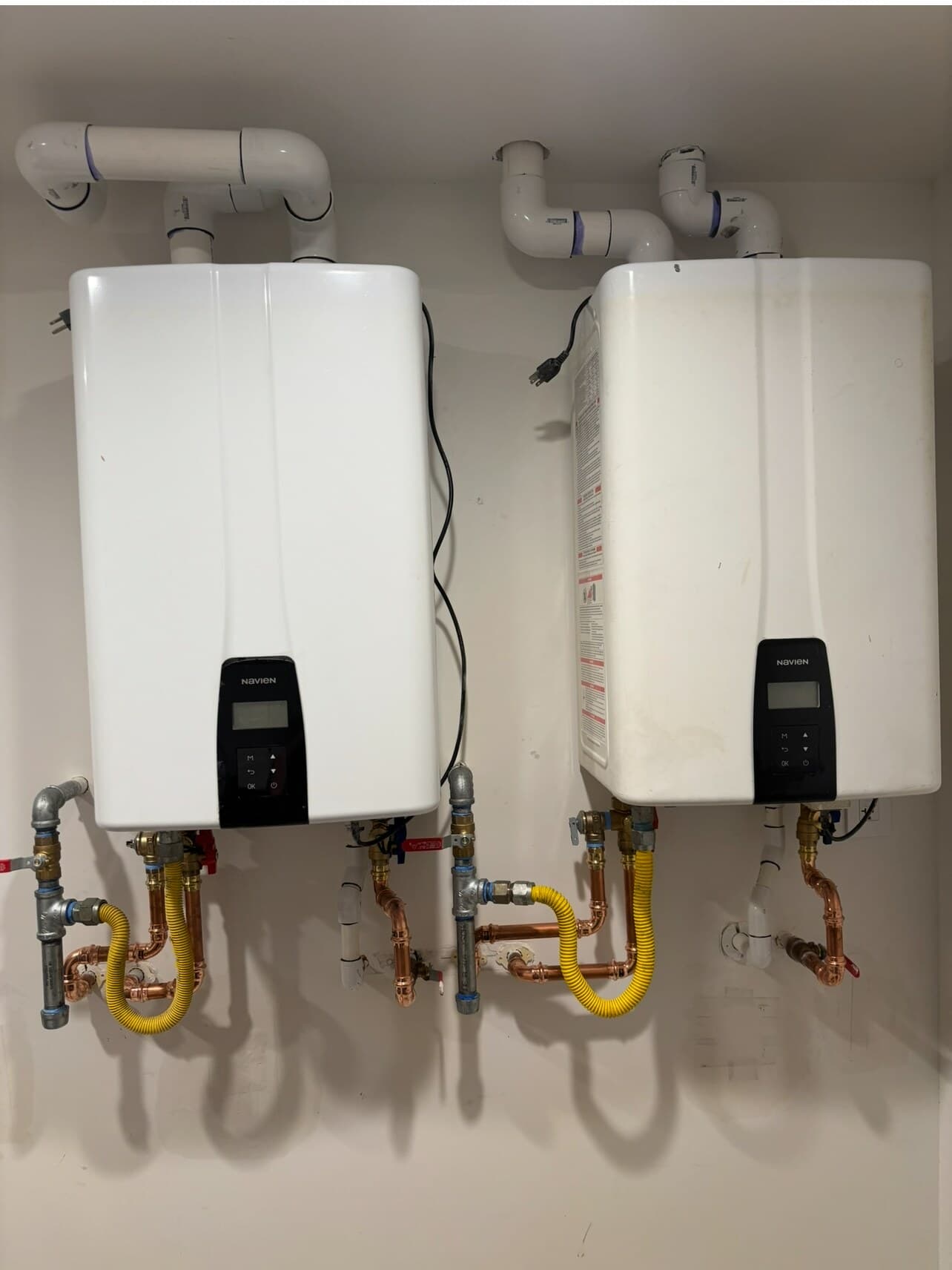
Installation and replacement
We install quality equipment and do the surrounding work properly: gas sizing, venting, intake, condensate, seismic strapping, expansion control and isolation valves. The code items are not upsells, they are the difference between an install that passes and one that fails.
- Residential and select commercial replacement
- Bradford White and other quality tank heaters
- Large-capacity water heaters
- Navien and other tankless systems
- Tank-to-tankless conversions
- Gas-line upgrades, venting, intake and condensate piping
- Expansion tanks, isolation valves and code-related upgrades
Tank to tankless, honestly
Tankless is excellent in the right house and oversold in the wrong one. It usually needs a larger gas line, new venting and a different location, which is real money on top of the unit. In a house with a modest gas service and a short run to a single bathroom, a good tank heater is often the better buy. We will tell you which one you are, including when the answer costs us the bigger job.
Hot water that takes too long
Long waits at a far fixture are a piping and recirculation problem, not a heater problem, and swapping the heater will not fix it. Recirculation pumps, check valves, dedicated return lines and on-demand controls all solve it in different ways, at very different costs.
- Hot-water recirculation pumps and controls
- Check valves and dedicated return piping
- Point-of-use heaters for remote fixtures
Hard water is the local factor
Conejo Valley water is hard enough that scale is the dominant wear factor on hot-water equipment. It coats tank elements, narrows tankless heat exchangers and shortens the life of every mixing valve downstream. Annual flushing matters here more than it does in softer-water regions, and whole-house softening pays for itself faster.
Where we do this work
Tankless & Water Heaters across the Conejo Valley
More of this work
Tankless & Water Heaters we have done
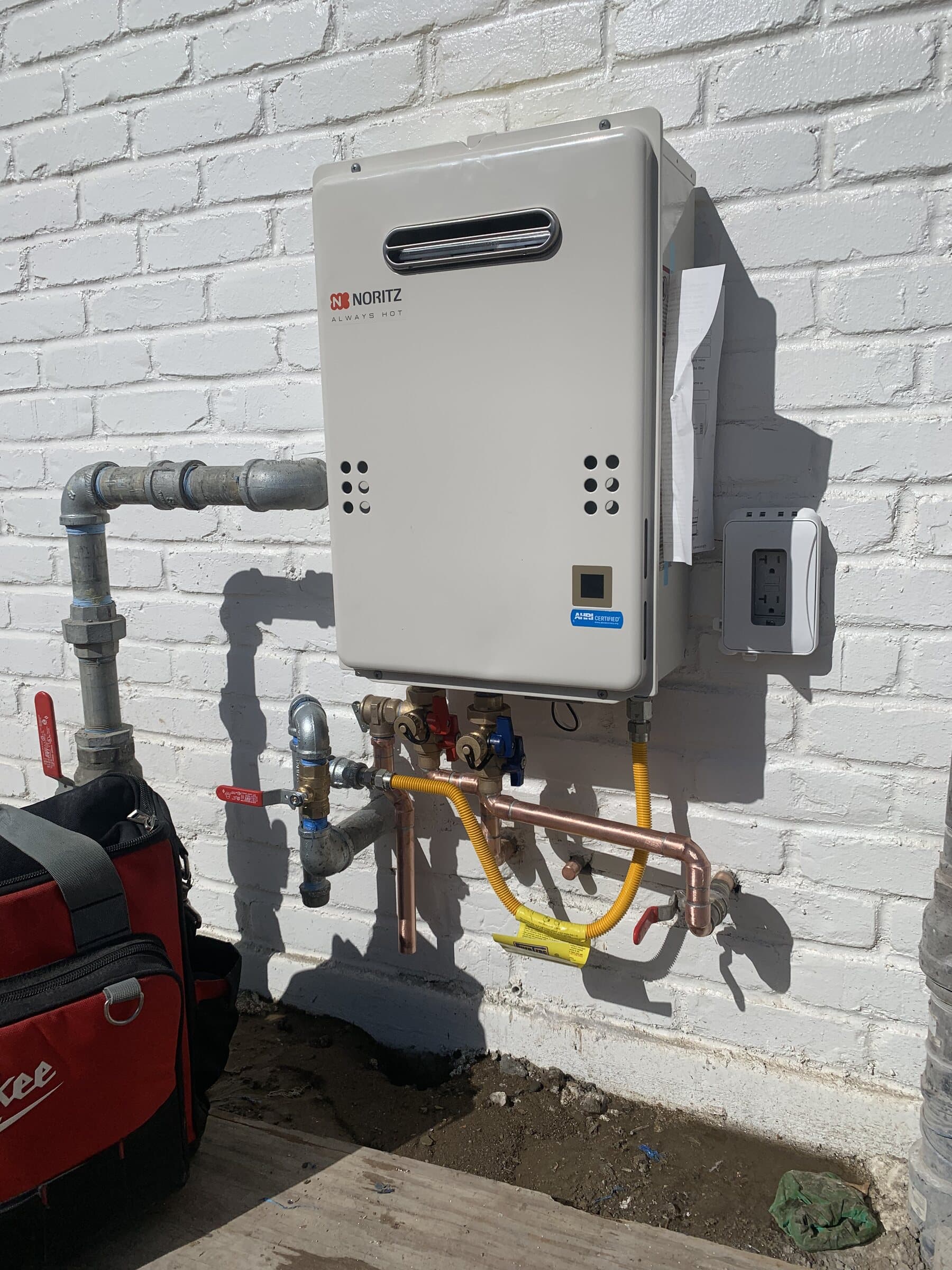
Noritz tankless, exterior mount
An exterior tankless mount on brick. Outdoor installation removes the venting problem entirely, which is often what makes a tankless conversion viable in an older house with no good vent path.
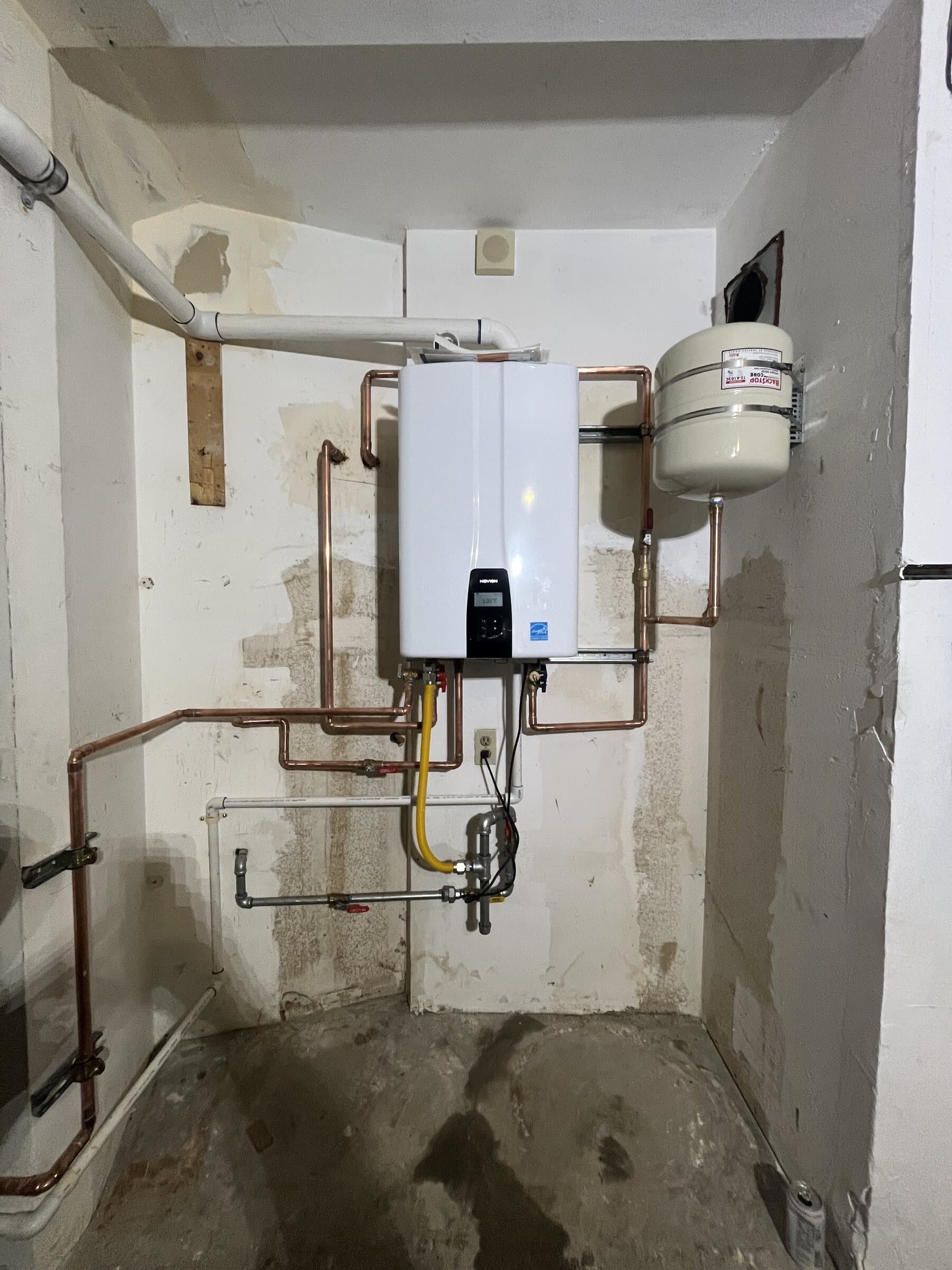
Tankless conversion, utility room
A tank-to-tankless conversion. The unit is the small part — the work is the gas line upsize, the vent path and the condensate route, and those are what decide whether tankless makes sense in a given house.
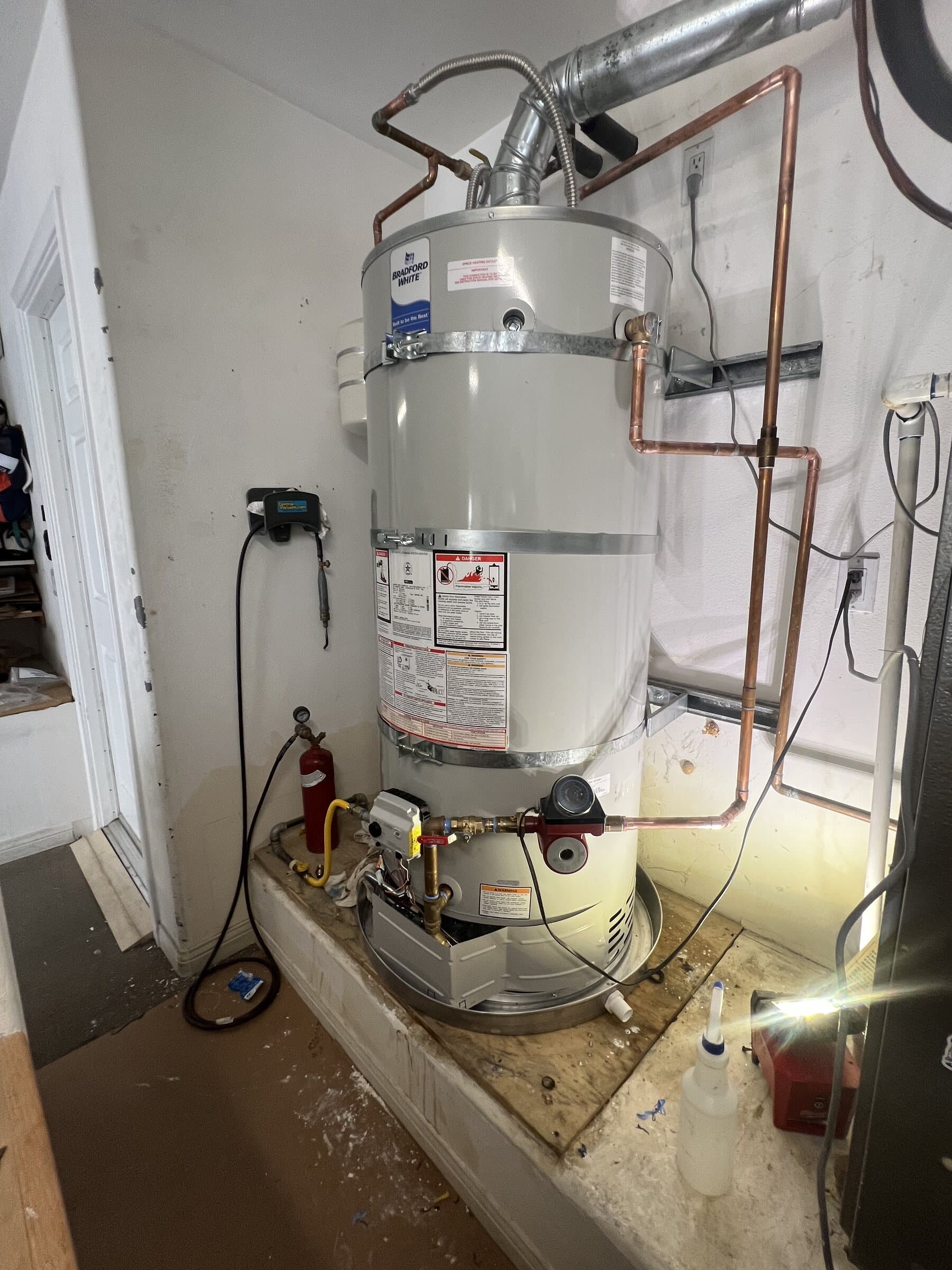
Tank heater, closet install
A tank replacement with expansion tank, seismic strapping and a drain pan. Those three are code items in California and the first things an inspector looks for — they are also the first things a cheap quote leaves out.
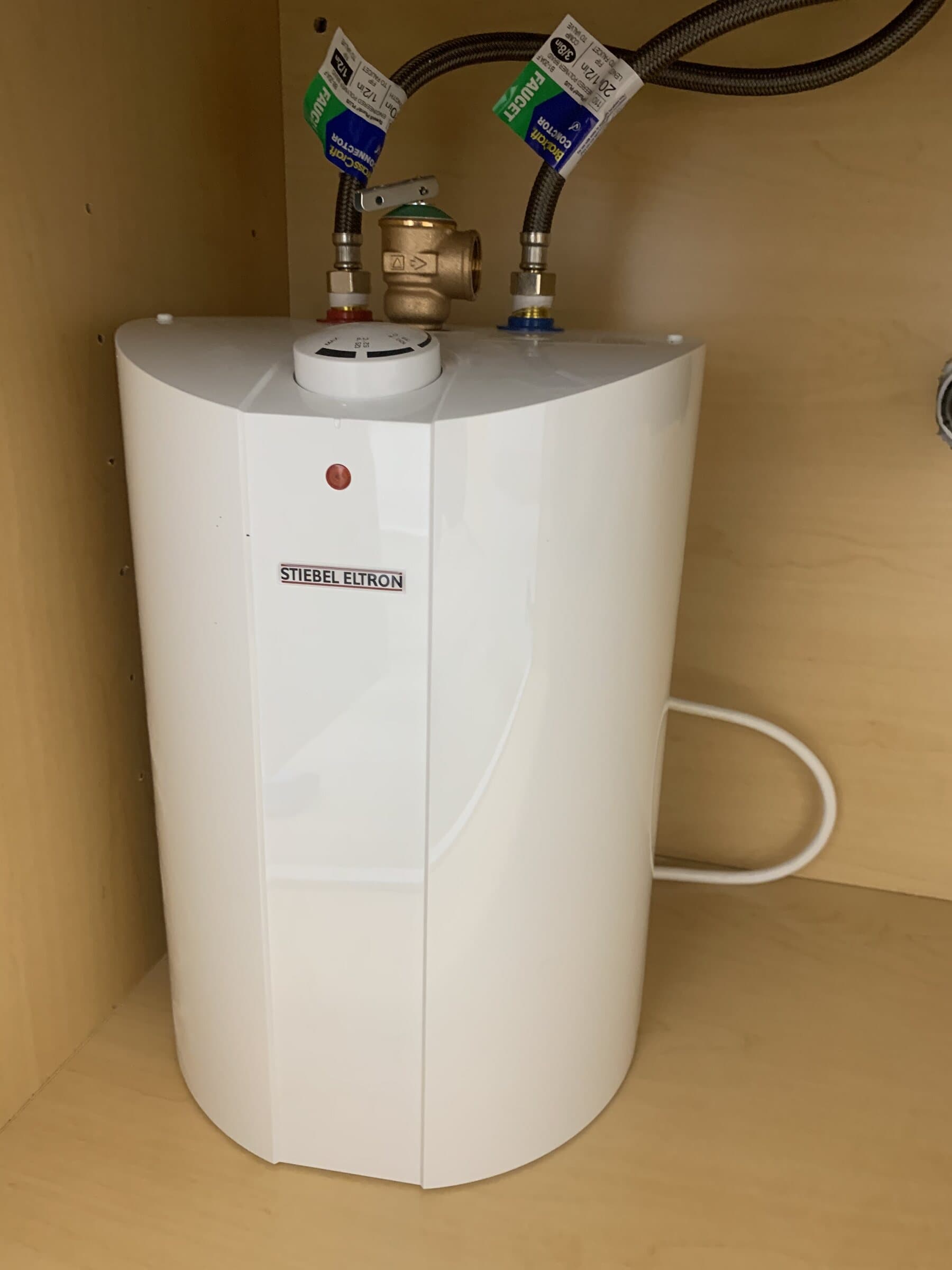
Point-of-use heater, remote fixture
A point-of-use mini-tank serving a fixture too far from the main heater to be worth waiting on. Note the T&P relief valve and braided connectors — the small code items that get skipped on a rushed install.
Common questions
Tankless & Water Heaters, answered
How long should a water heater last here?
Eight to twelve years is typical for a tank in this area, and hard water pushes it toward the low end when the tank is never flushed. Tankless units last longer but only if they are descaled on a schedule — an unflushed tankless in Conejo Valley water can lose efficiency within a few years.
Do I need an expansion tank?
If the house has a pressure regulator or a check valve on the main — most here do — then the system is closed, and thermal expansion has nowhere to go. Code requires expansion control on a closed system, and without it you are pushing pressure spikes through every fixture in the house each time the heater fires.
Is tankless worth it?
It depends on the house. Where there is adequate gas capacity, a sensible vent path and real demand from multiple bathrooms, it is a genuinely better system. Where the gas line would need upsizing across the whole house for a single bathroom's benefit, it usually is not. We price both so you can see the difference rather than take our word for it.
Do you flush water heaters?
Yes, tank flushing and tankless descaling both. In this water it is the single most cost-effective maintenance item there is.
Related services
Gas & Outdoor Gas
Gas line installation and extensions, including outdoor kitchens, fire features, pool heaters and generators.
Residential Plumbing
The everyday work: leaks, faucets, toilets, angle stops, water pressure and hot-water problems, done properly.
Repipes, Re-Routes & Repairs
Repairs where a repair will hold, re-routes instead of breaking slab, and full repipes when a system is finished.
Need tankless & water heaters?
Talk to Oscar directly — (805) 567-7808. CSLB Lic. #1140851, bonded and insured.